The Greater Horn of Africa (GHA) is set to experience mixed weather conditions between April 8–15, 2026, with enhanced rainfall in some regions and reduced precipitation in others, alongside generally warmer-than-average temperatures.
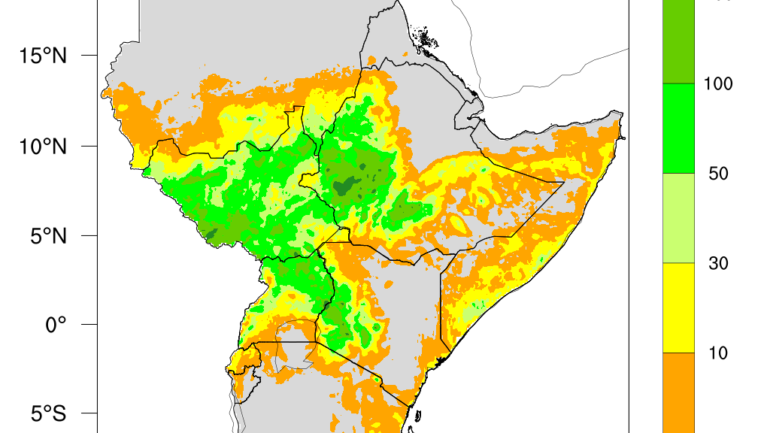
According to the latest forecast from the IGAD Climate Prediction and Applications Centre, moderate rainfall of 50–200 mm is expected over parts of Rwanda, Burundi, eastern Tanzania, south-western Ethiopia, and northern South Sudan.
In contrast, light rainfall of less than 50 mm is likely across large parts of Tanzania, South Sudan, eastern and southern Kenya, southern and northern Somalia, as well as parts of Uganda and western Ethiopia.
Wetter-than-usual conditions are projected over parts of northern South Sudan, western Ethiopia, and eastern Tanzania, signaling enhanced rainfall systems that could support pasture regeneration and improve water availability.

However, much of Kenya, Uganda, Tanzania, and the southern parts of South Sudan, Ethiopia, and Somalia are likely to receive below-average rainfall, pointing to a continuation of dry conditions in these areas.
The exceptional rainfall outlook highlights only isolated pockets of intense precipitation, mainly in eastern Tanzania and a few localized areas across the region. This indicates that extreme rainfall events will be limited in spatial extent, though rainfall exceeding the 90th percentile in parts of northern Kenya and eastern Tanzania may still trigger localized flooding, particularly in low-lying areas.
Greater Horn of Africa Temperature Outlook
Temperatures across the greater horn of africa region are expected to remain elevated in spit. Maximum temperatures exceeding 32°C are likely in parts of eastern South Sudan, Ethiopia’s Afar region, and southern Sudan, forming a pronounced heat belt across the northern sector.

Most areas across the Greater Horn of Africa will experience moderate to high temperatures ranging between 20–32°C, while cooler conditions below 20°C are expected in highland regions, including central Kenya and parts of Ethiopia.
Temperature anomalies further indicate that warmer-than-normal conditions will dominate much of the region, particularly across Sudan, South Sudan, Ethiopia, and Tanzania. A stretch of strong positive anomalies across the northern and central regions suggests persistent and intensified heat.
In contrast, localized cooler-than-average conditions are expected in parts of western Ethiopia, South Sudan, and some highland areas, likely linked to increased cloud cover and rainfall.
The combination of high temperatures and reduced rainfall in several areas is expected to increase heat stress levels.
Much of South Sudan, eastern Kenya, Tanzania, central and southern Somalia, northeastern Somalia, coastal Eritrea, and southern Sudan are projected to fall within the “extreme caution” heat stress category.

These conditions could have implications for agriculture, water availability, and human health. Reduced rainfall may affect crop growth and pasture conditions, while elevated temperatures increase the risk of heat-related illnesses, particularly among vulnerable populations.
As weather patterns remain uneven, the outlook outlines the need for climate-informed planning and strengthened early warning systems across the Greater Horn of Africa.